
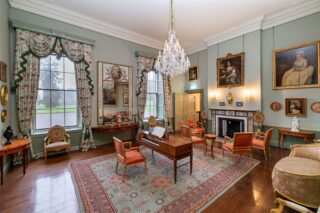
The basement of Emo Court was the unseen heart of the house. Here, servants once moved through kitchens, pantries, storage rooms, and passageways, supporting the grandeur above with quiet efficiency. Unlike the decorative reception rooms, these spaces were designed for function rather than display. Stone floors, functional corridors, and practical workrooms speak to a daily rhythm of labour and necessity.
By opening these interiors to visitors, the narrative of Emo Court is expanded. The splendour of the formal rooms is now set against the authenticity of the working quarters, offering a complete picture of how a great Irish country house operated.
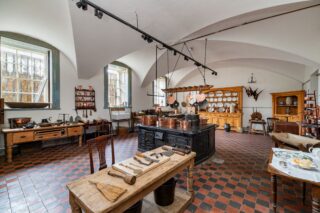
The presentation of the basement followed a programme of careful planning and restoration led by our OPW conservation architects. Their task was not only to conserve the fabric of the structure but also to interpret its story for the public. The result is an experience that retains the integrity of the spaces while ensuring accessibility and safety.
A key element in the project was the furnishing of the basement with period-appropriate objects that evoke its former life. Here, the assistance of Matt McNulty a long-standing supporter of Irish heritage and the proprietor of tourism and heritage management services,, was invaluable. By helping to acquire tools, utensils, and other domestic items, he ensured that the atmosphere of the quarters could be authentically recreated. This attention to detail brings substance to the architecture, allowing visitors to imagine the daily life of those who worked below stairs during the Victorian era.
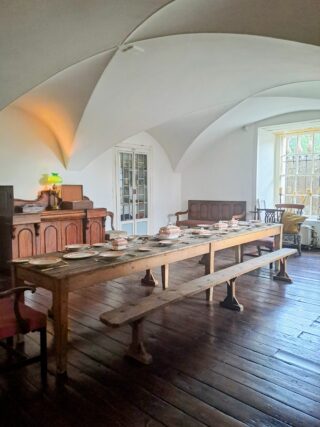
The basement is not only a historic space but also a living one. Over time, it has become a valuable habitat for bats, a protected species in Ireland. In preparing the area for public access, the OPW worked in close collaboration with the National Parks and Wildlife Service to ensure this habitat was safeguarded. Through sensitive environmental management and discreet adaptations, the project succeeded in balancing heritage presentation with ecological responsibility.
This partnership demonstrates how cultural and natural heritage can coexist, allowing the house to be appreciated as both a monument of human endeavour and a sanctuary for wildlife.
The unveiling of the basement interiors enriches the visitor journey through Emo Court. Above stairs, guests encounter the artistry of Gandon’s vision and the history of aristocratic and later custodianship. Below stairs, they discover the spaces of work, service, and resilience—rooms that once sustained the grandeur on display above.
Together, these contrasting worlds tell a more nuanced story of Emo Court: a house of splendour built upon foundations of labour, care, and quiet industry. The restoration ensures that both sides of this history are honoured, offering visitors not only beauty but understanding.