
Dane Scott
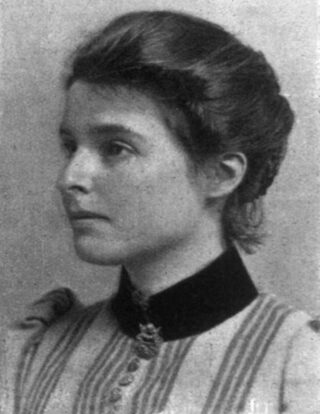
Born 1858, Beatrice Webb was a social reformer, feminist, and historian. She produced a nine-volume history of English Local Government. She served as commissioner for the Royal Commission on the Poor Laws. In 1908, she attended a hearing at the Custom House, before which she toured the workhouses and met a deputation, from the Irish Workhouse Association and the Irish Women’s Suffrage and Local Government Association. Under their influence, Webb questioned an inspector of the Local Government Board at the hearing. The inspector claimed that female representation in Local Government was satisfactory. Suffice to say, the issue of female local representation was deemed unimportant and did not figure in the subsequent report.
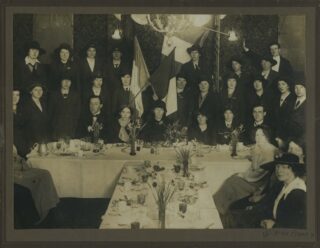
Ann ‘Nancy’ Wyse Power was born in 1889, to her politically active mother Jennie. She joined the Gaelic League in 1901. She graduated in 1912 from UCD with a First-Class Honours BA in Celtic Studies.
She became a member of Cumann na mBan in 1915, and took an active part in the Rising, joining the GPO garrison. From 1917, she was one of Cumann na mBan’s two honorary secretaries, and was instrumental to its post-Rising revitalisation – by 1920, the Cumann numbered 500 branches and 20,000 members.
Pre 1922, she was recruited to Dáil Éireann’s Foreign Service, and travelled to Berlin to set up an office to promote Irish interests. In 1923 she joined the Department of Industry and Commerce. In 1932, she became Seán T. O’Kelly’s private secretary in the Department of Local Government and Public Health. She went on to become principal officer in the civil service, becoming one of the first women to do so.
Nancy resented the inferior status of women within the Irish civil service, tracing such back to the British civil service. She argued, to the Brennan Commission, that women were kept from their male counterparts, thus limiting their prospects. It is worth mentioning that Nancy was never married and that if she was the marriage bar would have drastically limited her career options and greatly reduced her achievements.
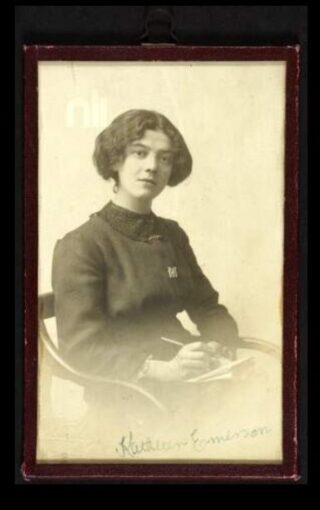
In 1912, Kathleen ‘Kay’ Emerson attacked the Custom House, smashing its windows. Emerson was a campaigner for women’s suffrage, and found herself aggravated by the rejection of the Snowden Amendment to the Home Rule Bill, which could have provided such. In the court proceedings regarding the act, Emerson said that she broke the windows because she would be ashamed not to, and that nothing short of a bomb would adequately express her feelings. As consequence, and her refusal to pay a fine, she was imprisoned in Mountjoy. She went on hunger strike, only to be released when her fine was paid anonymously.
On marrying, Emerson gave up her revolutionary ways. However, she was soon reactivated and took part in the broader movement against de Valera’s 1937 constitutional provisions on the status of women.
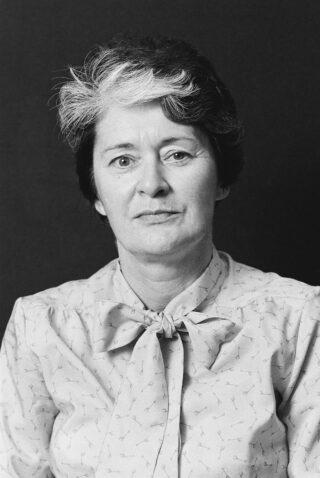
In 1932, Eileen Desmond was born to a fisherman and a seamstress. She was educated at the Convent of Mercy and was one of two girls in her class to sit her leaving certificate.
Aged seventeen, she took her first role in the civil service, as part of the Department of Posts and Telegraphs. In 1955, she married Labour TD Daniel Desmond. Due to the marriage bar in the civil service, Eileen had to give up her job, which led her to take up work assisting her husband.
In 1965 she successfully competed in a by-election for a seat vacated by her deceased husband, and succeeded him on Cork County Council. She was the second female Labour TD, and one of the youngest members of the seventeenth Dáil Éireann and one of only five women elected. She ran unsuccessfully for the nineteenth Dáil, with some concluding that she lost her seat because of a ‘militantly feminist’ speech she gave on television. Eileen contested this, positing that her loss was due to the re-drawing of constituency boundaries. She was re-elected to the twentieth and twenty-first Dáilí, and, in 1979, to the European Parliament.
From 1981 to 1982, she was Minister for Health and Social Welfare of the twenty-second Dáil, making her the first woman to attain a senior cabinet position.
We have barely scratched the surface when it comes to the ‘women’s history’ of Ireland, and so there is still a significant amount of work to be done. Perhaps we might inspire others to action and the uncovering of figures and facts that have been neglected up to this point. At the very least, we aim to update our display to permanently feature the stories of these women and affirm their place in history.