Women involved in Custom House history
At the Custom House Visitor Centre, we commemorate the history of the building and its relevance to contemporary Ireland. This history can be male-centric. Women’s history, as it is labelled, is often omitted from the greater, accepted narrative of Ireland. This is a symptom of a much larger issue. To help address this issue, we have researched some of the women who have contributed to the history of our building and of Ireland. This research has since been turned into a specialised tour which we can now offer to visiting groups.
Born 1858, Beatrice Webb was a social reformer, feminist, and historian. She produced a nine-volume history of English Local Government. She served as commissioner for the Royal Commission on the Poor Laws. In 1908, she attended a hearing at the Custom House, before which she toured the workhouses and met a deputation, from the Irish Workhouse Association and the Irish Women’s Suffrage and Local Government Association. Under their influence, Webb questioned an inspector of the Local Government Board at the hearing. The inspector claimed that female representation in Local Government was satisfactory. Suffice to say, the issue of female local representation was deemed unimportant and did not figure in the subsequent report.
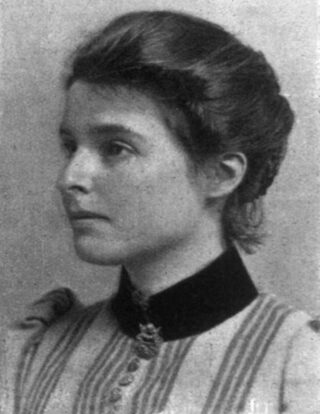
Ann ‘Nancy’ Wyse Power was born in 1889, to her politically active mother Jennie. She joined the Gaelic League in 1901. She graduated in 1912 from UCD with a First-Class Honours BA in Celtic Studies.
She became a member of Cumann na mBan in 1915, and took an active part in the Rising, joining the GPO garrison. From 1917, she was one of Cumann na mBan’s two honorary secretaries, and was instrumental to its post-Rising revitalisation – by 1920, the Cumann numbered 500 branches and 20,000 members.
Pre 1922, she was recruited to Dáil Éireann’s Foreign Service, and travelled to Berlin to set up an office to promote Irish interests. In 1923 she joined the Department of Industry and Commerce. In 1932, she became Seán T. O’Kelly’s private secretary in the Department of Local Government and Public Health. She went on to become principal officer in the civil service, becoming one of the first women to do so.
Nancy resented the inferior status of women within the Irish civil service, tracing such back to the British civil service. She argued, to the Brennan Commission, that women were kept from their male counterparts, thus limiting their prospects. It is worth mentioning that Nancy was never married and that if she was the marriage bar would have drastically limited her career options and greatly reduced her achievements.
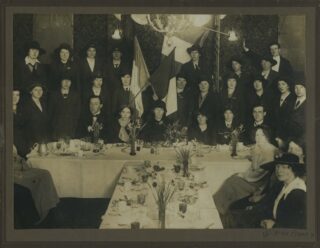
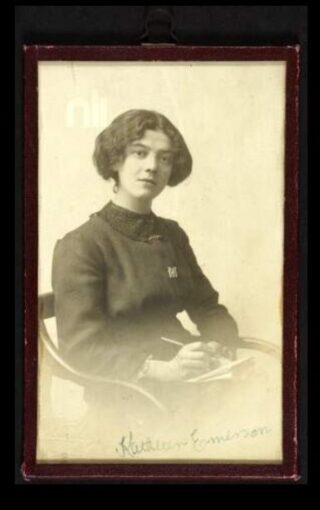
In 1912, Kathleen ‘Kay’ Emerson attacked the Custom House, smashing its windows. Emerson was a campaigner for women’s suffrage, and found herself aggravated by the rejection of the Snowden Amendment to the Home Rule Bill, which could have provided such. In the court proceedings regarding the act, Emerson said that she broke the windows because she would be ashamed not to, and that nothing short of a bomb would adequately express her feelings. As consequence, and her refusal to pay a fine, she was imprisoned in Mountjoy. She went on hunger strike, only to be released when her fine was paid anonymously.
On marrying, Emerson gave up her revolutionary ways. However, she was soon reactivated and took part in the broader movement against de Valera’s 1937 constitutional provisions on the status of women.
In 1932, Eileen Desmond was born to a fisherman and a seamstress. She was educated at the Convent of Mercy and was one of two girls in her class to sit her leaving certificate.
Aged seventeen, she took her first role in the civil service, as part of the Department of Posts and Telegraphs. In 1955, she married Labour TD Daniel Desmond. Due to the marriage bar in the civil service, Eileen had to give up her job, which led her to take up work assisting her husband.
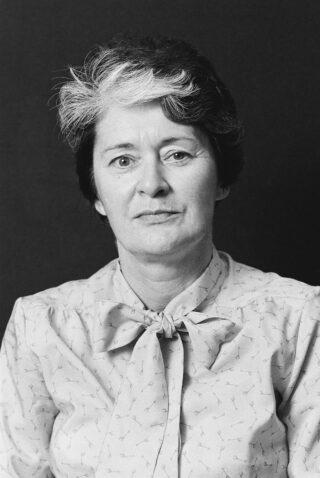
In 1965 she successfully competed in a by-election for a seat vacated by her deceased husband, and succeeded him on Cork County Council. She was the second female Labour TD, and one of the youngest members of the seventeenth Dáil Éireann and one of only five women elected. She ran unsuccessfully for the nineteenth Dáil, with some concluding that she lost her seat because of a ‘militantly feminist’ speech she gave on television. Eileen contested this, positing that her loss was due to the re-drawing of constituency boundaries. She was re-elected to the twentieth and twenty-first Dáilí, and, in 1979, to the European Parliament.
From 1981 to 1982, she was Minister for Health and Social Welfare of the twenty-second Dáil, making her the first woman to attain a senior cabinet position.
We have barely scratched the surface when it comes to the ‘women’s history’ of Ireland, and so there is still a significant amount of work to be done. Perhaps we might inspire others to action and the uncovering of figures and facts that have been neglected up to this point. At the very least, we aim to update our display to permanently feature the stories of these women and affirm their place in history.
The Pirate Queen of Mayo’s Monuments
For the past year I have been working on a multi-team project to highlight Ireland’s unguided National Monuments in OPW care. There are approximately 790 of these monuments, dating from various periods, encompassing castles, tombs, abbeys, forts, and standing stones. Many of these different sites connect with each other through their historical context, within this extensive portfolio.
The monuments of County Mayo are an example of this historical connection, with many of them linked to the powerful families of Burke and O’Malley. Its castles and abbeys are forever connected because of their association with one woman. One woman who broke the mould, who kept fighting, and who has gone down in Irish legend as The Pirate Queen.
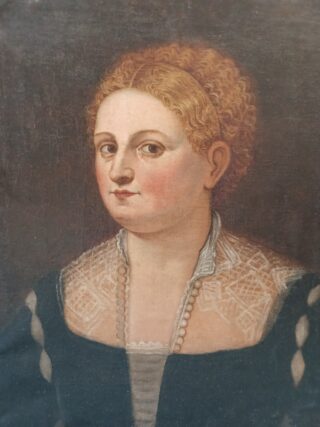
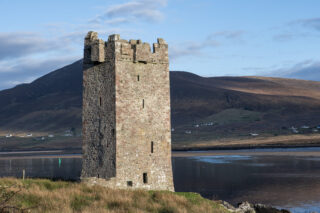
There are many names The Pirate Queen is known by today, but she is probably best known as Gráinne O’Máille (Grace O’Malley) or Granuaile. Three castles in Mayo are referred to by her name: Rockfleet Castle, Kildavnet Castle, and Clare Island Castle are also known as Granuaile’s Castles/Towers. Both Kildavnet and Clare Island Castle were built, in the 15th and 16th centuries, by the O’Malley family, a powerful Gaelic clan within Connaught. Rockfleet, a 15th/16th century tower, was owned by the Burke family, descendants of the Anglo-Norman de Burgos. It was this castle that became Gráinne’s base of piracy operations through her marriage to her second husband, Richard-an- Iarainn Burke.
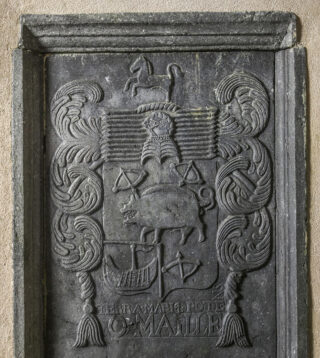
Gráinne spent her childhood between the family castles of Belclare in Co. Galway, and Clare Island in Co. Mayo. It is likely that her education was delivered by the monks who lived in the abbey on Clare Island, an abbey of which the O’Malley’s were patrons. The original abbey is said to date back to the 13th century, while the church that exists on the island today dates to around the 15th century and contains the tomb of the O’Malley family. A plaque with the family motto ‘Terra Mariq Potens’ (Powerful by Land and Sea), sits beside a canopied tomb, believed to be the burial place of Gráinne O’Máille herself. Today, the church contains some of the finest medieval frescoes in Ireland.
Gráinne returned home to Clare Island after the murder of her first husband, Dónal O’Flaherty, by a rival clan in 1565. It was then that she established her fleet of three galleys and an army of 200 men. This army was partially made up of O’Flaherty men, who followed her leadership after her husband’s death. Such loyalty was a testament to her prowess as a leader, as well as her tenacity; something which was displayed from a young age. Wanting to join her father on a voyage to Spain, Gráinne cut her hair like a boy, earning her the nickname Gráinne Mhaol (Grace the Bald).
The castle on Clare Island was situated near the harbour, making it the perfect place for Gráinne to begin her career as a ‘sea merchant’. The castle is three storeys tall, with the main living room likely situated on the first floor, and there is evidence that gun-loops existed which are now blocked up. A parapet walk is situated along the top of the north and south walls, a typical security feature of castles from the medieval period.
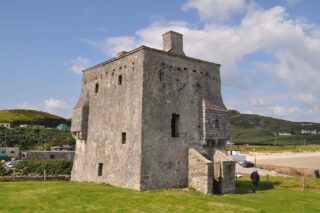
Gráinne was strategic in where she operated her fleets from, and her second marriage to Richard-an-Iarainn Burke was one driven by material convenience. She wanted access to his castle at Rockfleet, ideally located on a quiet inlet of Clew Bay, not too far from the O’Malley Kildavnet Castle overlooking the Achill Sound. Both castles are four storeys high, with stunning views over the surrounding water and land, perfect for observing oncoming attacks. It was known that Gráinne launched attacks on trading ships from Galway during her time at Rockfleet, leading to an attempted siege of the castle in 1579 by Captain William Martin.
The Captain very nearly became Gráinne’s captive.
Gráinne and Richard agreed to a trial marriage of a year, with folklore claiming that after the year was up Gráinne locked Richard out of Rockfleet Castle and demanded a divorce. This is unlikely given that the couple were married right up to his death in 1584.

It was after Richard’s death that life became increasingly difficult for Gráinne in the form of newly appointed Governor of Connaught, Richard Bingham; whose sights became set on the fearsome queen of the sea. After enduring imprisonment in Dublin Castle, the capture of her youngest son, and the confiscation and destruction of her fleet and lands over a number of years, Gráinne took a stand and appealed directly to Queen Elizabeth I to end Bingham’s vendetta. They met in 1593, with the Queen granting Gráinne’s return to the sea and rebuilding of her fleet, believing the Pirate Queen would be fighting the Queen’s cause on the waters. Gráinne now had a fleet of three galleys
capable of carrying 300 men each.
It is said that Gráinne O’Máille died in 1603 at Rockfleet Castle, and now rests on Clare Island. Her strength and her fierce nature did not go unnoticed by the men she dealt with throughout her life. Sir Henry Sidney (English Lord Deputy) stated that she was the most ‘notorious woman in all the coasts of Ireland’, while Sir Nicholas Malby (Governor of Connaught) claimed ‘she thinketh herself to be no small lady’. Gráinne lived an adventurous and vivid life, and her monuments in County Mayo reflect the larger than life character of this extraordinary woman.
More information on these unguided monuments in Mayo can be found here
Sources:
- Chambers, Anne. Ireland’s Pirate Queen: the true story of Grace O’Malley, 2003.
- Dib.ie/biography – contributed by Emmet O’Byrne
- Harbison, Peter. Guide to National and Historic Monuments of Ireland, 1992.
- maps.arcgis.com – Historic Environment Viewer
- Tuatha.ie
Her-story and Her-itage
Women's history, their stories, and their achievements, are often layered within or hidden behind the stories and accolades of men.
We are finally entering a period where women's stories are highlighted and celebrated, and the below names are just a few of the remarkable women associated with our historic heritage sites.
This is Herstory
Margaret O’Sullivan – Garinish Island
*1908 – 1999*
Margaret “Maggie” O’Sullivan lived most of her life on Garinish Island. She began working for the Bryce family in 1926 when she was still a teenager, acting as the housekeeper, attending to high-profile guests to the island, including most of the Irish Presidents who were serving during her lifetime.
Margaret was a fiercely independent woman, rowing her boat back and forth to the mainland to do her shopping and attend mass every Sunday with her dog. Margaret lived on the island until 1998, and was the last permanent resident of Garinish Island.
In 1992 she was recognised by Glengarriff Tourism & Development Association for her contribution to tourism in the area.
Nancy Wyse Power – Custom House Visitor Centre
*1889 – 1963*
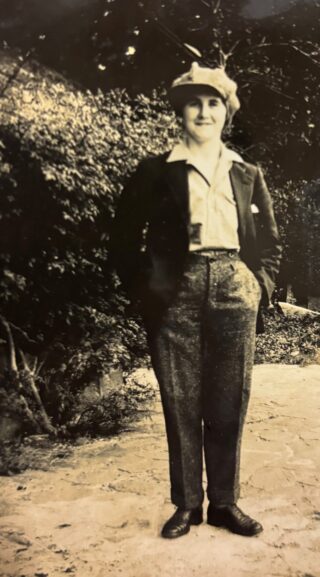
Nancy Wyse Power was a member of Cumann na mBan (1915), the Gaelic League (1901), and a Civil Servant. She received her BA in Celtic Studies from UCD, and continued to do a PhD in Germany on Celtic Philology.
Nancy was heavily involved in the Nationalist cause, helping to deliver messages during the 1916 Easter Rising, and supporting the families affected by the Rising in the subsequent years. She was appointed honorary secretary of Cumann na mBan in 1917.
In 1923 she began working for the Department of Industry and Commerce, and in 1932 was personally requested to be the private secretary of Seán T. O’Kelly, within the Department of Local Government and Public Health at the Custom House.
Nancy was one of the first female Principal Officers in the Free State civil service, and used her position to advocate for equal rights for women in the civil service.
Elizabeth O’Farrell – Kilmainham Gaol Museum
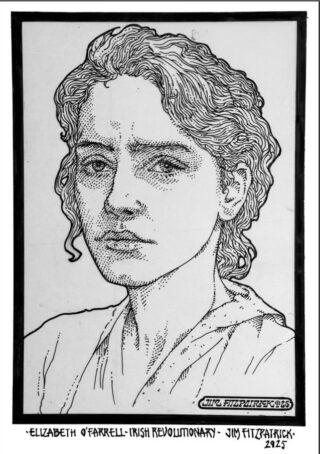
Elizabeth O’Farrell’s story has been hidden from history for years. She was literally erased from key events in 1916, airbrushed from the photos as though she were never there.
It is now known and accepted that Elizabeth and Julia Grenan were in a relationship, living with each other for most of their lives, and doing almost everything together. The two joined multiple organisations including the Gaelic League, the Irish Women’s Franchise League, the Irish Women Workers’ Union, and Inghinidhe na hÉireann. They were taken under the wing of Markievicz and trained in the use of firearms.
In 1916, Elizabeth was assigned to the Irish Citizen Army, delivering messages to Athenry, Spiddal, and Galway City, before returning back to Dublin to medically attend to the injured, and deliver ammunition from the GPO to other garrisons in the city. Both she and Grenan cared for James Connolly after he was shot.
Elizabeth was picked by Patrick Pearse to discuss surrender terms with the British military, and was sent out into heavy fire, armed with only a white flag and a Red Cross symbol. It is she who stands alongside Pearse to deliver the unconditional surrender to General Lowe. Lowe assured Elizabeth that she would not be imprisoned, but after the surrender she was strip-searched and held in both Ship Street Barracks and Kilmainham Gaol. Lowe ordered her immediate release upon hearing of her imprisonment.
During the War of Independence both Elizabeth and Julia delivered dispatches to the IRA, and were strongly anti-treaty, helping to raise funds for the families of anti-treaty prisoners.
In 1967 a plaque was unveiled at Holles Street Hospital, where Elizabeth once worked as a mid-wife, and a foundation to support nurses in their postgrad studies was created. In 2012 City Quay Park, where Elizabeth was born, was renamed Elizabeth O’Farrell Park.
Both Elizabeth O’Farrell and Julia Grenan are buried beside each other in Glasnevin Cemetery.
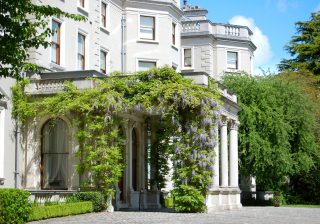
Gwendolen Guinness, The Countess of Iveagh – Farmleigh House & Gardens
*1881 – 1966*
Lady Gwendolen Guinness was one of few women of her time to be elected as a Member of Parliament in the House of Commons. She won her seat in the Southend-On-Sea by-election in 1927, which she kept until 1935.
Though at times Gwendolen was reduced to a fashion icon rather than a parliamentarian, with one report by The Daily Telegraph in 1934 stating that people were ‘eager to see her fashionable clothes’, Gwendolen Guinness remained steadfast in her fight for and defence of women’s rights.
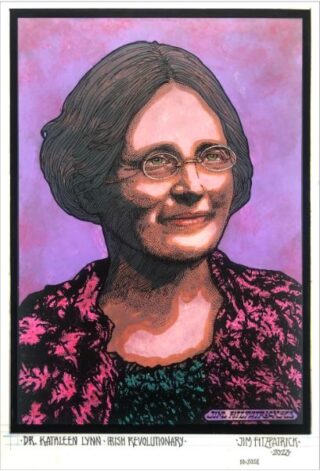
Dr. Kathleen Lynn – Kilmainham Gaol Museum
Dr. Kathleen Lynn was involved in multiple movements throughout her life, including the suffragist, labour, and nationalist movements.
She was a key player during the 1916 Easter Rising, having taught the members of Cumann na mBan first aid, and was Chief Medical Officer of the Irish Citizen Army during the rebellion. She was imprisoned for a time in Kilmainham Gaol for her part in the Rising.
However, her revolutionary involvement is just one side of Kathleen Lynn’s story. She studied in Manchester, Dusseldorf, Dublin, and the US, and was a fellow of the Royal College of Surgeons in 1909. From 1910- 1916 Lynn was the first female resident doctor in the Royal Victoria Eye & Ear Hospital.
She is remembered for her work in St. Ultan’s Hospital for infants and their mothers, and she helped further international research on TB eradication.
Hilda Grove Annesley & Sylvia Cooke Collis – Annes Grove Gardens
*1869 – 1961* – Hilda
Hilda Grove Annesley, nee Macnaghten, married Richard Grove Annesley in 1907 and together they were responsible for creating the paradise garden of Annes Grove near Castletownroche in North Cork. For over fifty years she was the constant presence at Annes Grove welcoming family, friends and visitors from far and near. She was happiest when out riding – she rode side saddle all her life and was admired as a very fine horsewoman.
In 1912, she wrote to Dick (Richard) telling him if she should die suddenly or killed out hunting that he was not to grieve too much as “we must all die someday and I have no wish to live to be older than 50”. She did in fact live until 1961 at the age of 92. Through her diaries and memoirs Hilda left behind an account of country living from the first half of the 20th century.
*1900 – 1973* – Sylvia
Daughter of Hilda Grove Annesley from her first marriage to Henry Cecil Phillips, Sylvia Cooke Collis was born in Glanmire, Co Cork but spent most of her youth in Annes Grove after her mother married Richard. Like her mother she loved the outdoor life and was involved with horses, dogs and fishing (her step father was a very keen fisherman). She also developed an interest in art and studied under John Power at the Crawford Municipal School of Art and later trained with Mainie Jellett, with whom she became friends.
She was good friends with another famous neighbour in North Cork, Elizabeth Bowen, who encouraged Sylvia further in her endeavours. Sylvia exhibited widely in the mid-twentieth century and was known as a modern artist, influenced by Jellett herself and the Fauve movement. No longer a household name, her art nevertheless has stood the test of time and may be due a revival.
- courtesy of Aileen Spitere
Countess Constance Markievicz – Kilmainham Gaol Museum
*1868 – 1927*
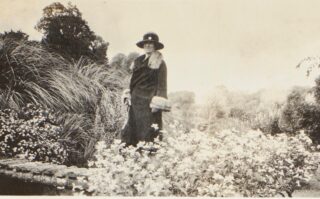
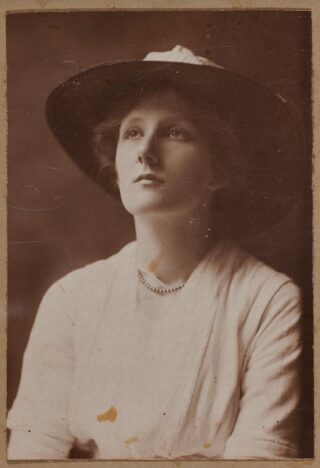
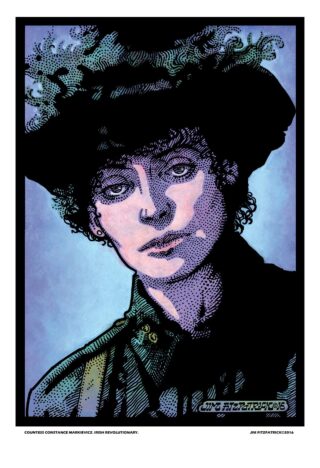
Constance Markievicz was heavily involved in the revolutionary fight for Irish freedom and in Irish politics. Her involvement in the republican movement dates to 1908, when she joined both Sinn Féin and Inghinidhe na hÉireann – both of which she became an executive member of in 1911.
Markievicz was sympathetic to the workers cause during the Lock-out in 1913, and set-up soup kitchens. She was the honorary treasurer of the Irish Citizen Army, and was responsible for the merging of Inghinidhe na hÉireann with Cumann na mBan.
During the 1916 Easter Rising, Markievicz was second-in-command to Michael Mallin at Stephen’s Green/Royal College of Surgeons, a role for which she was imprisoned for 14 months. She was held in Kilmainham Gaol for a short period, before being transferred to Aylesbury Prison.
Markievicz was the very first woman elected to Westminster in 1918, but as a member of Sinn Féin, and someone who did not recognise the British Parliament, she refused to take her seat. In March 1919 she became minister for labour in the first Dáil Éireann.
Constance Markievicz is now buried in Glasnevin Cemetery.
Margaret Pearse – Pearse Museum, St Enda’s Park
*1857 – 1932*
Margaret Pearse was a staunch nationalist and elected member of Dáil Éireann in 1921; vocally Anti-Treaty, Margaret was dedicated to keeping the memory of her two sons (Willie and Patrick Pearse) alive in everything that she did after the executions in 1916.
Margaret raised funds to keep the school Patrick set-up, St. Enda’s, running for as long as possible, travelling to America in 1924, raising $10,000 while there.
Margaret Pearse was given a state funeral upon her death, and is now buried in Glasnevin Cemetery.
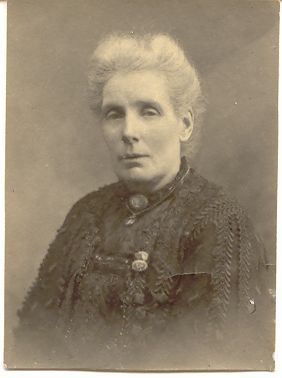
Lady Anne Wandesforde, The Countess of Ormond – Kilkenny Castle
*1754 – 1830*
Lady Anne, born Susan Frances Elizabeth (Anne) Wandesford, was heiress to the family mines in Castlecomer.
She married into the Butler family, and focused on healthcare within the Castlecomer area, organising the set-up of a fever hospital and infirmary during the 19th century.
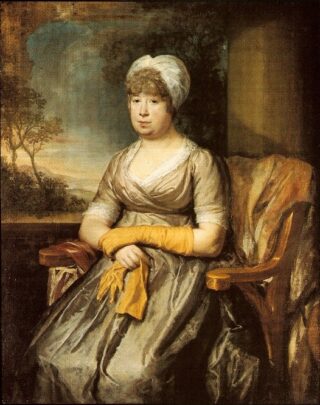
Lady Louisa Conolly – Castletown House & Parklands
*1743 – 1821*
Lady Louisa dedicated the later years of her life, after her husband’s death in 1803, to charitable works.
She established a female charter school, as well as industrial schools were children could be trained in various trades. She also had a church built, and believed that both Catholics and Protestants should be educated together.
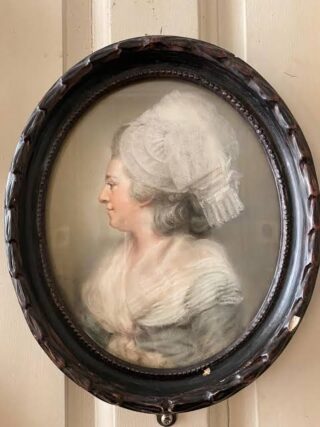
Angelica Kauffman – Rathfarnham Castle & Dublin Castle
*1741 – 1807*
Renowned neoclassical-style painter Angelica Kauffman is famous for her portraits and history paintings, capturing some of the most influential people of her time through her art.
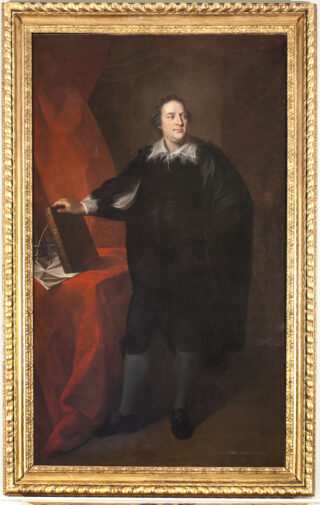
A founding member of the Royal Academy in London, Kauffman’s talents were highly sought after by the elite, including the Earl of Ely of Rathfarnham Castle. She visited Ireland briefly in 1771, and some of her portraits of the Loftus family still reside in the Castle, including one of the Earl himself, Henry Loftus (see below).
Some of her historical paintings can also be viewed within the State Apartments of Dublin Castle.
Grace O’Malley, The Pirate Queen – Clare Island & Kildavnet Castle
*1530 – 1603*
The legendary Pirate Queen, Grace O’Malley, was a formidable woman, asserting her leadership in a man’s world.
From a young age Grace showed determination, cutting her hair short to look like a boy so that she could board her father’s ship, when he refused her access. This action earned her the nickname of ‘Gráinne Mhaol – Grace the Bald’.
Her first husband, Domhnall O’Flaherty, engaged in ongoing fighting against the Joyce’s for control of Hen’s Castle in Co. Galway. After he was ambushed and killed by his enemies in 1565, Grace defended the castle, refusing to surrender to her enemies, and forcing them to retreat.
Grace became known as one of the most feared sea captains in Ireland, commanding a fleet of ships and an army of 200 men.
Sir Nicholas Malby, Governor of Connaught, said of her at the time that she ‘thinketh herself to be no small lady’ – she was not one to hide her light under a bushel.
Sir Henry Sidney proclaimed Grace ‘a notorious woman in all the coasts of Ireland’.
Today, many OPW sites are associated with Grace O’Malley, including Kildavnet Castle which bears her name ‘Granuaile’s Tower’, and Clare Island where she is said to be buried.